IDP gyro stabilizer --the most cost-effective gyro stabilizer for ships with displacement from below 5 tons to above 2000 tons
"The sea breeze blows gently, the waves sway gently, the sailors who have sailed far away have worked so hard, now we have returned to the embrace of the motherland, let our sailors have a good sleep..." The melodious night of the naval port became popular in the 1980s, and indirectly showed us the reality that ships at sea swayed violently in the wind and waves and officers and soldiers could not sleep. People who have sailed on a ship have more or less experienced seasickness. You can experience it yourself, and only those who have experienced it know it. Throughout the ages, people have made various attempts to reduce the swaying of ships. For example, Cao Cao in the Three Kingdoms period thought of connecting the bows and sterns of ships, and the result is known to everyone. Later, technologies such as bilge keels, anti-roll water tanks, anti-roll fins, anti-roll gyroscopes, rudder anti-roll, and anti-roll weights appeared in the field of ship anti-roll.
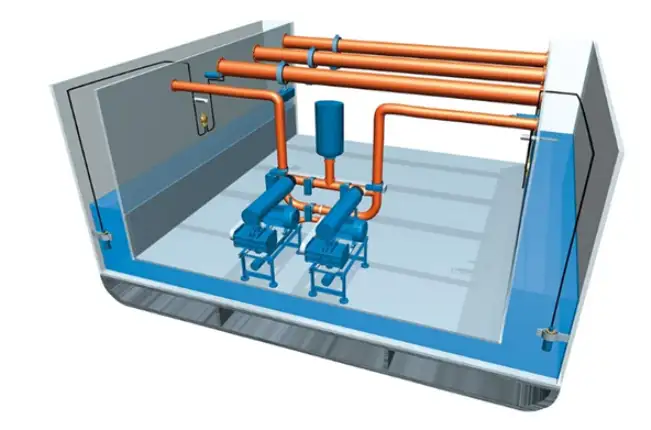
The principle of the anti-rolling tank is to use the roll restoring moment generated by the different liquid levels on the left and right sides of the water tank to offset the wave disturbance moment. The anti-rolling tank can only generate sufficient roll restoring moment when it reaches a certain volume, so the anti-rolling tank occupies a large space on the ship, but can only achieve a very limited roll reduction effect, generally around 30-40%, and people often cannot feel this roll reduction effect. In addition, the self-rolling frequency of the anti-rolling tank must be higher than the self-rolling frequency of the ship's roll in order to achieve roll reduction. Otherwise, not only will it not reduce the roll, but it will increase the roll effect, which greatly limits the scope of use of the anti-rolling tank.
Anti-rolling tank
The fin stabilizers are installed on the bilges on both sides of the ship, and have a wing-shaped cross-section. When water flows through the fin stabilizers, the mechanical device is used to control the rotation of the fin stabilizers, so that the water flow generates a force on them, thereby forming a anti-roll torque and reducing the roll of the hull. However, at zero speed, there is no water flow acting on the fin stabilizers, so they cannot play a roll reduction role. The higher the speed, the greater the force generated by the water flow, and the better the roll reduction effect. However, the higher the speed is not necessarily better. At high speeds, the fin stabilizers will cause a lot of additional resistance. Therefore, the scope of application of the fin stabilizers is relatively small. The fin stabilizer equipment has a complex structure, strict requirements on the installation location, high cost, and low adaptability, resulting in many ships that need to reduce roll being unable to be installed.

Fin Stabilizer
The anti-roll gyro mainly uses the stability of the high-speed rotor itself to achieve anti-roll. Its core is the mechanical gyro rotor that rotates at high speed inside the device. When the high-speed rotor swings in one direction (called precession), the high-speed rotor will output a torque in the direction perpendicular to the precession axis. The magnitude of this torque is proportional to the speed of the high-speed rotor, the moment of inertia of the rotor in the direction of the rotation axis, and the precession speed. Therefore, the larger the size of the gyro rotor, the higher the speed, and the faster the precession speed, the greater this torque. Using this torque as the output of the device, we call it the output torque of the gyro rotor. At present, many kinds of equipment have been successfully applied in various occasions using the output torque of high-speed gyro rotors.
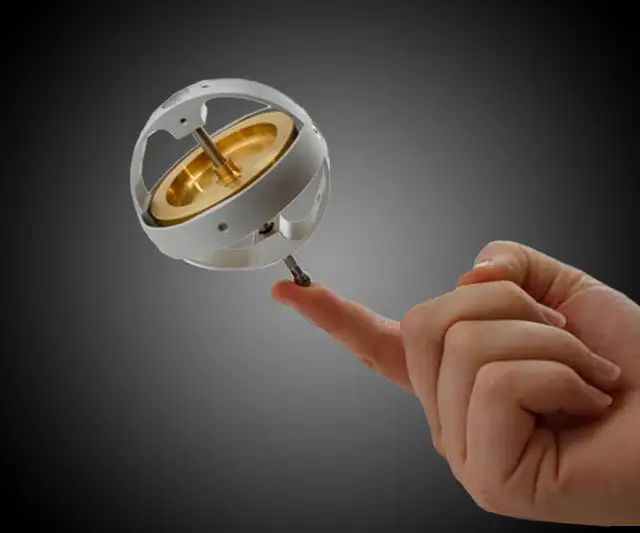
The output torque generated by the rotation of the gyro can be used to resist the effect of gravity to achieve the stability of the rotor itself. For example, when spinning a gyro on a desktop, the gyro will shake a little at first, but it will automatically adjust the angle and rotate upright on the desktop soon.
The flywheel is stable at high speed
Gyro stabilization has also been successfully applied in other fields.
The torque motor is used to drive the high-speed gyro rotor to precess, and this output torque can be used to achieve the attitude control of the space station. The four control torque gyros equipped by NASA for the International Space Station are used to achieve the attitude control of the International Space Station. In outer space, without any external force, this is the best solution to achieve attitude control.
NASA Space Station Control Moment Gyro
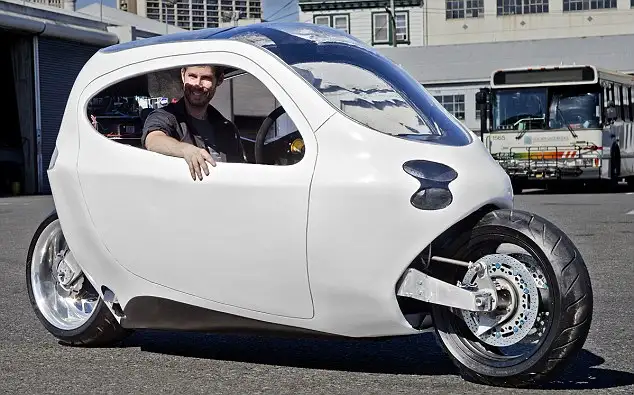
The servo motor is used to drive the high-speed gyro rotor to precess, and the output torque can be used to achieve the stability of the two-wheeled vehicle. The following figure shows a two-wheeled electric vehicle produced by Lit Motor. The vehicle is equipped with two high-speed gyro rotors with opposite rotation directions. The servo system controls the precession of the gyro rotors to achieve the stability of the two-wheeled electric vehicle under various working conditions.
Gyro controled two-wheel electric vehicle
The core of the gyro-stabilized platform is four high-speed rotating gyro rotors, which adopt pure passive control. When the high-speed gyro rotors swing with the carrier, they are allowed to precess freely within a certain range, which can achieve the stability of the top gimbal. A stable platform can be built on floating carriers such as aircraft and ships to isolate various motion interferences of the carrier.
Gyro-stabilized platform
When the high-speed gyro rotor is large enough and the speed is high enough, the output torque generated by its precession will be very large, which can achieve the roll reduction of a 10,000-ton ship. The gyro roll reduction device realized by this principle has been successfully applied on large warships and luxury cruise ships. The gyro roll reduction device generally adopts a controllable passive control strategy to constrain the precession of the high-speed rotor within a certain speed and angle range. The size of its roll reduction ability is mainly indicated by the rotor angular momentum, that is, the product of the rotor moment of inertia and the speed. The larger the moment of inertia of the gyro roll reduction device, the greater the roll reduction torque it outputs, and the stronger the roll reduction ability. Conversely, the weaker the roll reduction ability.
USS Henderson (AP-1), a US military transport ship, is 147 meters long and has a full load displacement of 12,400 tons. It is equipped with two gyro roll reduction devices with a total weight of 80 tons. The rotor diameter of each device is 2.74 meters, weighs 26 tons, and the speed is 1100 rpm. The rotor direct drive motor equipped with each device consumes 45 kW of power. During multiple transatlantic voyage tests, the gyroscopic roll stabilization device was able to suppress the ship's roll to within 3° under the worst sea conditions.
USS Henderson(AP-1)
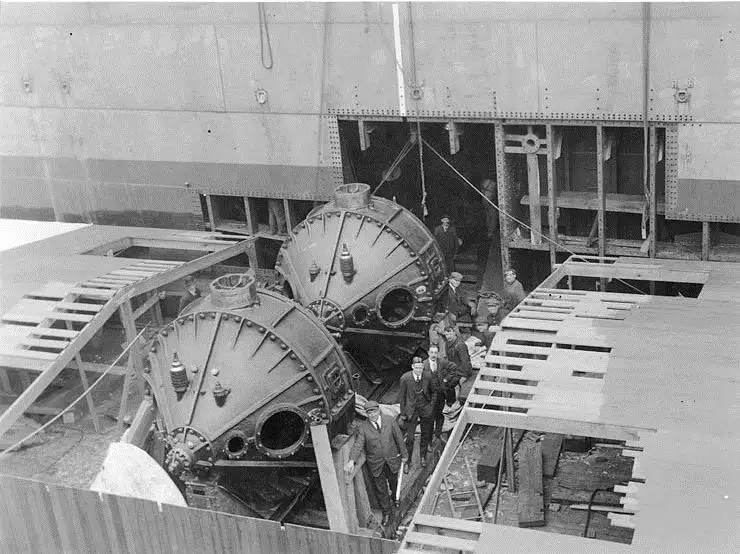
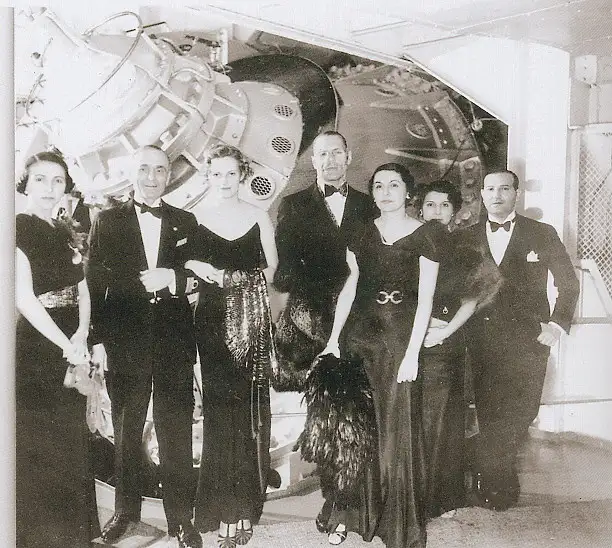
The luxury cruise ship SS Conte di Savoia is 248 meters long and has a full load displacement of 48,000 tons. It is equipped with three gyroscopic anti-roll devices. Each device weighs 200 tons, the rotor diameter of the gyroscopic anti-roll device is 4 meters, and the rotation speed is 910 rpm, which can keep the ship's roll within 3 degrees in severe sea conditions.
Workers installing gyroscopic stabilization equipment on the SS Conte di Savoia
Passengers and the gyroscopic stabilization device in action on the luxury cruise ship SS Conte di Savoia
Due to its high cost, gyro roll stabilization devices were previously mainly used in the military field. Later, with the emergence of fin stabilizers, the weight and cost of gyro roll stabilization devices became obvious disadvantages, and they were gradually replaced by relatively cheap fin stabilizers.
At present, since the fin stabilizers do not have the ability to reduce roll at zero speed, especially many ships are not suitable for installing fin stabilizers on the bottom of the ship, many ships currently do not have suitable roll stabilization devices to use. In this context, gyro roll stabilization devices have begun to re-enter people's vision with a new look.
With the continuous advancement of technology, the weight and cost of gyro roll stabilization devices have been greatly reduced compared with the past, and the overall structure of the equipment has also been greatly simplified. The previous gyro roll stabilization devices were all implemented with a large and bulky gear transmission system and an energy-consuming braking system, and the module weight accounted for nearly 1/3 of the total weight of the equipment. If the current controllable passive hydraulic damping system is used, the weight of this module in the total weight of the equipment can be almost ignored. The improvement of the rotor support system and the performance of the rotor material also makes the modern gyro roll stabilization device have a doubled anti-rolling ability compared with the previous one under the same weight.
With the improvement of people's living standards, the requirements for ship comfort are getting higher and higher. Gyro roll stabilization devices have gradually developed into standard products for yachts due to their advantages such as easy installation, installation at any position, anti-rolling under any working conditions, and predictable anti-rolling effect. Many civilian ships and official ships have also begun to be equipped with gyro roll stabilization devices.
IDash Technology Co., Ltd. is committed to ship gyro roll stabilization. The use of the most advanced gyro roll stabilization technology can almost eliminate the swaying of the ship, maximize the stability of the ship, and greatly improve the comfort of the ship. In order to fully realize the civilian use of equipment, IDash Technology has continuously redesigned the anti-rolling products, maximized the performance, reduced the cost, and made unremitting efforts for the widespread use of gyro roll stabilization devices.
IDash Technology's current gyro roll stabilization device product series can meet the anti-rolling needs of various ship types from 3 tons to less than 5,000 tons. A single IDP 8000 gyro anti-roll device from IDash Technology can control the roll angle of a ship with a displacement of about 15,000 tons to within 3 degrees under severe sea conditions. For larger ships, multiple devices can be installed, and their anti-roll capabilities can be linearly superimposed.
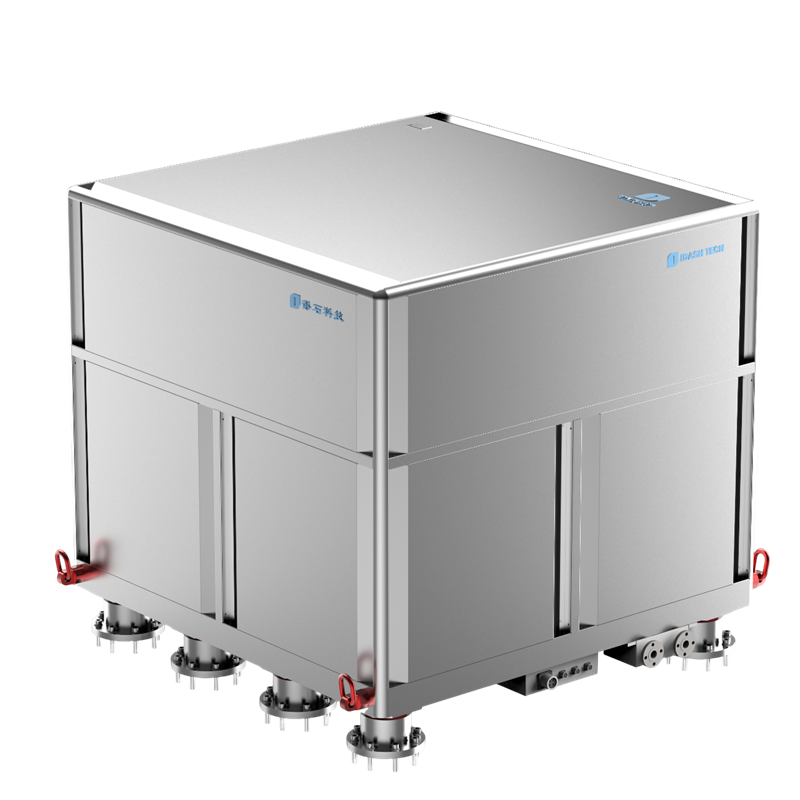
IDash Technology plans to develop a series of gyro roll reduction products covering various ship types below 10,000 tons within two years. It will meet the roll reduction needs of ships that still need to go out to sea in severe sea conditions, such as super yachts, floating platforms, scientific research ships, survey ships, official ships and warships. IDash Technology looks forward to the participation of outstanding talents from all walks of life, and to display your talents in the cause of ship roll reduction all over the world!